The Plague
The DecameronThe Plague is the 1348 pestilence that devastates Florence in the Tedaldo family story and gives The Decameron its occasion: the narrative first recalls the city’s suffering so that the circumstances behind the events to come can be understood. The account presents the disease not only as a physical catastrophe but as a force that remakes habits, relationships, and the conditions of communal life.
Arrival and Symptoms
The narrative dates the outbreak to 1348, after the pestilence had appeared in the East, killed innumerable people there, and spread progressively westward. It reached Florence in the Tedaldo family story around the beginning of spring. The account offers more than one explanation for its coming: the influence of the heavenly bodies, or human wrongdoing answered by God’s just wrath. Neither civic precautions nor repeated supplications prevented its effects from becoming visible.
The first signs were swellings in the groin or beneath the armpits, which people called plague-boils. Some grew to the size of an ordinary apple, others to that of an egg. They soon appeared on other parts of the body, and the illness could then show itself as black or livid blotches, scattered or densely sown, often first on the arms and thighs. The narrator describes both the swellings and blotches as signs of approaching death, presenting a disease whose visible marks offered little hope of recovery.
Transmission and Failed Remedies
Physicians’ counsel and medicines appeared to do no good. The narrator allows two possible reasons: the infection might have resisted treatment, or the many practitioners, including people without medical training, might not have known its cause and therefore failed to take suitable measures. Few recovered; nearly all died within three days of the signs appearing, sometimes without fever or other complication.
The danger seemed to travel through proximity to the sick, as readily as fire catches dry or greasy material brought near it. The account extends this fear beyond direct contact: touching clothes or other things used by the sick also seemed capable of transmitting the disease. To make that claim vivid, the narrator reports witnessing two hogs rooting through the rags of a poor man who had died of the plague. After taking the rags in their mouths and tossing them about, both animals soon fell dead upon them. The episode turns an object discarded in a public way into a visible emblem of contagion’s reach.
Responses and Social Rupture
People responded to the danger through sharply different strategies. Some withdrew into houses where no one had been sick, chose fine food and wine in moderation, avoided excess, and sought diversion in music while refusing news from outside. Others treated feasting, drinking, wandering, and laughter as the best defence, entering taverns and other people’s houses with little regard for property. Both groups still tried to shun the sick, and neither approach guaranteed safety: people following either way of life fell ill and died, often left almost abandoned after their earlier separation from the healthy had been reversed.
Flight was another answer. Many men and women abandoned the city, their homes, relatives, and possessions for country houses, reasoning that escape offered the surest protection. The account stresses the limits of that hope: plague struck people in different places, and flight did not ensure survival. The image of departure is therefore not a simple escape from danger but part of a broader collapse in which familiar protections no longer seemed dependable.
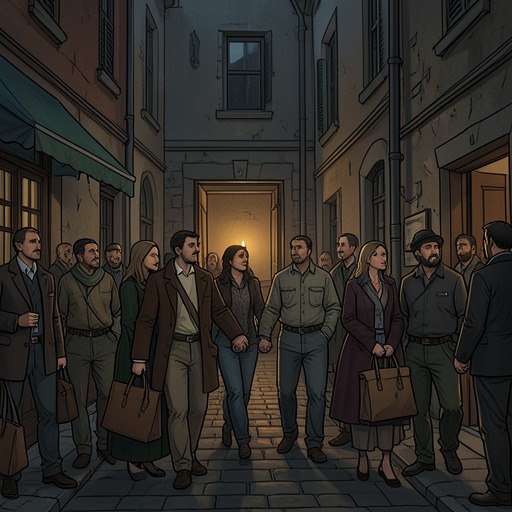
Fear also dismantled ordinary care. Neighbours avoided one another; relatives seldom visited or spoke except at a distance; brothers, sisters, spouses, and other kin abandoned one another. Most strikingly, parents refused to visit or tend their own children. The sick were left to the charity of a few friends or to servants attracted by extraordinarily high wages. Those servants were scarce, often inexperienced, and exposed to the same danger; many died while attending the ill. The lack of timely care, as well as the virulence of the disease, contributed to deaths that might otherwise have been avoided.
With women deprived of customary attendants, illness also altered the boundaries of bodily modesty: a sick woman might allow a man, young or old, to tend her and uncover her body when necessity required it, as she would have done for a woman. The narrator suggests that this experience could make survivors less modest afterward. The detail shows how emergency care changed private conduct as well as public relationships.
The Plague in the Storytelling Frame
The opening recollection makes The Plague the narrative condition for the events that follow, rather than a passing backdrop. Its pressure appears again on the Ninth Day, when Emilia leads the company from the palace to a nearby grove. Wild goats, deer, and other animals stand as though safe from hunters because the prevailing pestilence has kept those hunters away; they seem tame enough for the company to approach and make them run and skip. The scene gives the epidemic a consequence beyond the city’s human losses: ordinary relations between people, animals, and the landscape have also been unsettled.
The company returns garlanded with oak leaves and carrying flowers and fragrant herbs. They sing, talk, and laugh, eat together, dance, and make music before assembling at the accustomed hour for stories. Set against the earlier account of sickness, abandonment, and death, this ordered recreation does not undo the catastrophe. It establishes the fragile contrast on which the frame depends: storytelling and shared pleasure continue within a world still shaped by The Plague.